
My dearest Saint Paul’s,
I would be in error if I did not begin by expressing my gratitude for the outpouring of love and support that has been shown to me and my family during this difficult season. The cards, flowers, emails, hugs, and prayers have been so very appreciated. We have felt your care and concern for us—thank you. Nothing can fill the void that is left in the wake of Mum’s death, but the knowledge that we are in a place with people that love us deeply is a balm to our hurting hearts.
As we near the end of the program year, I want to share an upcoming change to our electronic communications. This edition of Parish Notes will be the final Parish Notes in its current format.
Beginning early in the fall we will be moving to a quarterly communication that functions more like a magazine or journal. There will be longer format essays from staff and parishioners, colorful pictures, and more.
The hope is that this new format will allow us to go a little deeper into topics that we do not necessarily have the chance to cover in other formats.
We will still have the E-news and Sunday Notes for routine communications; as well we will make use of dedicated emails for items that need to be communicated more quickly.
I know that any change can be difficult, but I hope that this will be a relatively smooth transition and that the more in-depth format of the new communication will make it more than worth it.
Paschal blessings,
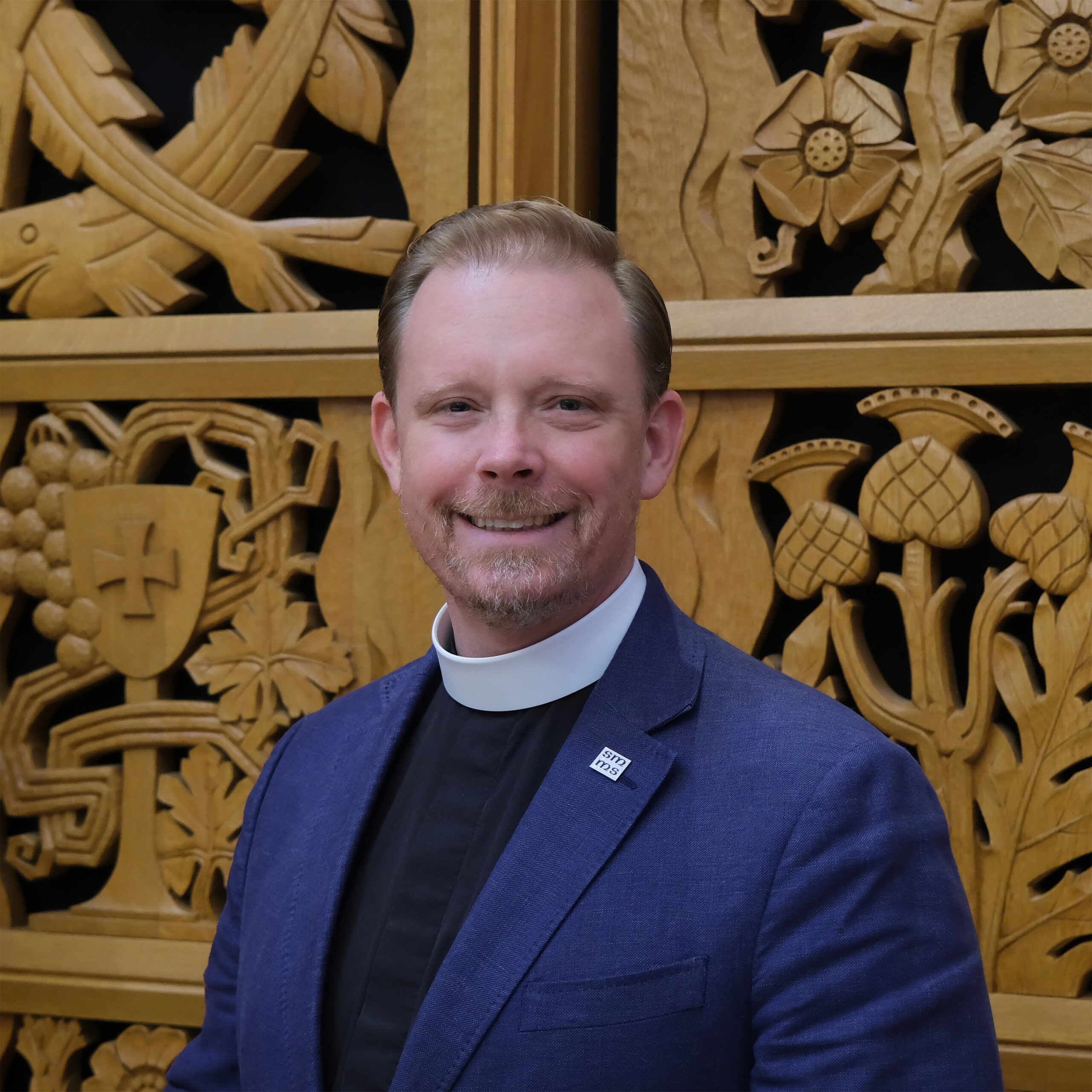
The Reverend T.J. Freeman SMMS
Seventeenth Rector
Saint Paul’s Episcopal Church
Preview: quarterly Parish Notes
The following article is a sample of the kinds of essays and reflections that we will publish in the new, quarterly Parish Notes, starting in September.
Have an idea for an article? Want to contribute photographs, graphics, or other visuals? Email Laurel Steinetz, Communications Manager for word count, specifications, and how to submit.
Reflecting on Parenting as a Spiritual Practice
by Lauren Dockery, Director of Children & Youth Ministries
On Sunday mornings last spring, the hallway outside the children’s classrooms filled in a familiar way week after week.
Leaving the 9 a.m. service, there was a brief bustle in the South Wing as parents dropped their children at church school. After goodbyes and a quick joke with teachers, the classroom doors closed and the hallway quieted.
Most parents drifted into Tucker Hall for coffee. Some found their way to the Forum or a conversation with a friend. Others returned to the South Wing. Week after week, while their children heard the Good News, many parents spent the next hour in the window-lined hallway, perched on ledges or leaning against the wall. Most pulled out their phones.
They stood only a few feet from one another, but rarely in conversation.
This is not unusual. Parenting young children can be intensely social and deeply isolating at the same time. Days are full of schedules, decisions, and constant attention, but connection with other adults is often brief. Even in places designed for community, it can be difficult to move beyond surface interaction.
Still, for many parents of younger children at St. Paul’s, that connection had not fully taken shape during the formation hour. Many families were new—to the parish, to parenting, or both—and had not yet found their people.
In conversations at The Village gatherings over the fall, parents began to name a desire for something less instructional and more reflective. They were also looking for connection with others who understood the particular rhythms of their lives.
Out of those conversations, a plan emerged.
Over five Sunday mornings in February and early March, 10 to 20 parents gathered each week. They represented 17 families with children who ranged in age from a few months old to college students.
The structure was simple. Each week began in silence, followed by a short reading connected to the liturgical season. Then came time for shared reflection, as parents were invited to consider the past week—its joys, its frustrations, its ordinary rhythms.
From the beginning, the group held a clear agreement: what was said in the room would remain there, and no one would give advice. Parents spoke, and others listened. No one was asked to fix, respond, or interpret. The conversation moved at its own pace, sometimes slowly, sometimes with energy.
Within that shared understanding, a wide range of experiences surfaced. Parents spoke about grief and how to talk about it with young children. Others described conflict between siblings, or the strain of keeping up with the daily rhythms of life with little kids. Some named the loneliness of moving and starting over, or the uncertainty of guiding a teenager through major decisions. Again and again, the conversation returned to the ordinary moments—questions children ask before they are ready to understand the answers, and words spoken in frustration that are later repaired.
Over the weeks, parents began to recognize each other’s stories. The room grew more familiar. When the formal time ended, people lingered. Conversations continued as parents walked together to pick up their children, and then out toward the playground. What had been an hour of waiting began to look more like an hour shared.
In a brief survey at the end of the five weeks, parents described the experience in a range of ways. Some spoke about the value of having space to reflect. Others named the relief of hearing that their experiences were not unique. Several pointed to the opportunity to be in conversation with other parents in a setting that felt open and un-pressured.
What took place during those weeks was not a class in the traditional sense. There was no curriculum to master, no set of strategies to implement. Instead, it offered something quieter: a space to pay attention.
To the work already being done in their homes.
To the patterns and pressures of daily life.
To the ways that raising children shapes not only schedules and routines, but also patience, perception, and relationship.
As the program came to a close, the conversations did not end so much as extend outward—into hallways, into classrooms, into the small interactions that make up parish life.
On any given Sunday, it is still possible to find parents waiting outside their children’s classrooms. But they are no longer waiting alone.
And the question that remains is a simple one:
What might it look like to continue to notice and share the deeper work already unfolding in the midst of ordinary family life and to keep making space for that here at St. Paul’s?